
Contents
- Adding a Client
- Working with Clients
- FAQs
Adding a client
Adding a client in Infinite:
Adding a client is simple. From most places in the platform, you will see a green + button in the top bar near your profile. When you click it, a drop down will give you the Add Client option.

You can also go directly to Client and User Management if you prefer. Once there, you will see a green button:
Simply click the Add Client button, and follow these simple steps:
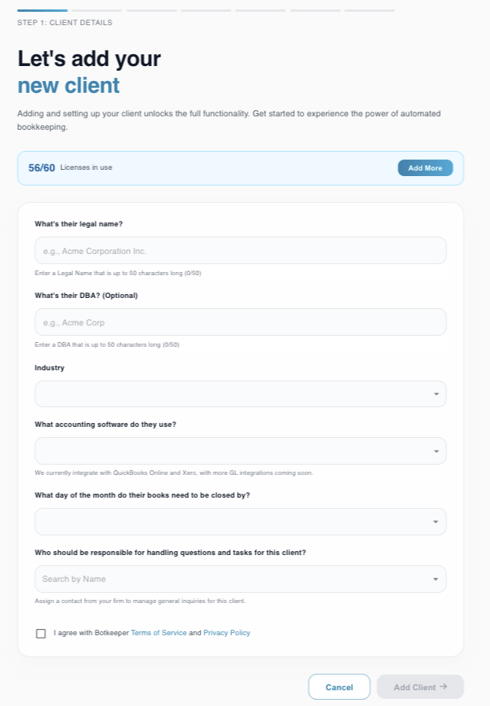
Step 1: Input Client Details
- Legal Name & DBA: Enter the client's legal name (and optional DBA).
- Licenses: View your available licenses. Click Add More if additional licenses are required.
- Industry & Accounting Software: Select the client’s industry and their accounting software (e.g., QuickBooks Online, Xero).
- Close Day: Choose the day of the month their books need to be closed.
- Assignee: Assign a primary contact/assignee from your firm responsible for handling questions. Any automated tasks will be assigned to this user to do.
- Accept the Terms of Service and click Connect GL (or Continue).
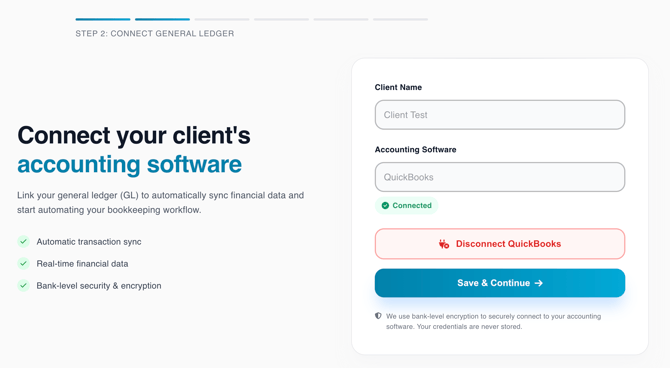
Step 2: Connect General Ledger (GL)
- Click Connect QuickBooks (or your selected GL).
- Authenticate through the secure popup window by logging into the client’s GL credentials.
- Select the correct company file and click Next.
- Once authenticated, return to the main flow and click Continue.
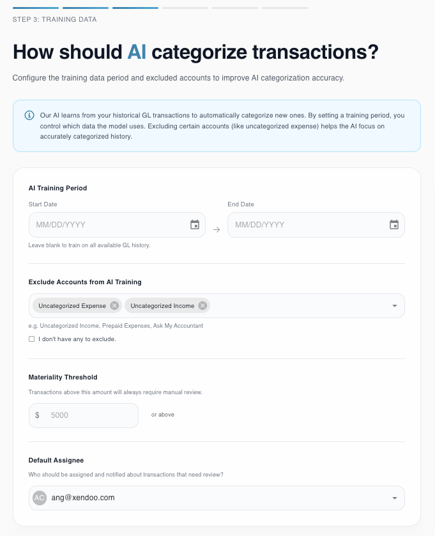
Step 3: Configure AI Training & Categorization Data
Configure how the AI model learns from historical data and handles exceptions:
- AI Training Period: Set a start and/or an end date to train the AI on a specific period. Leave blank to train on all available GL history.
- Exclude Accounts from AI Training: Select specific accounts (such as Uncategorized Expense, Uncategorized Income, etc.) that the model should ignore during learning.
- Materiality Threshold: Define a dollar threshold for large transactions that will always require manual review.
- Default Assignee: Select who should be assigned and notified when transactions require manual review.
- Click Continue.
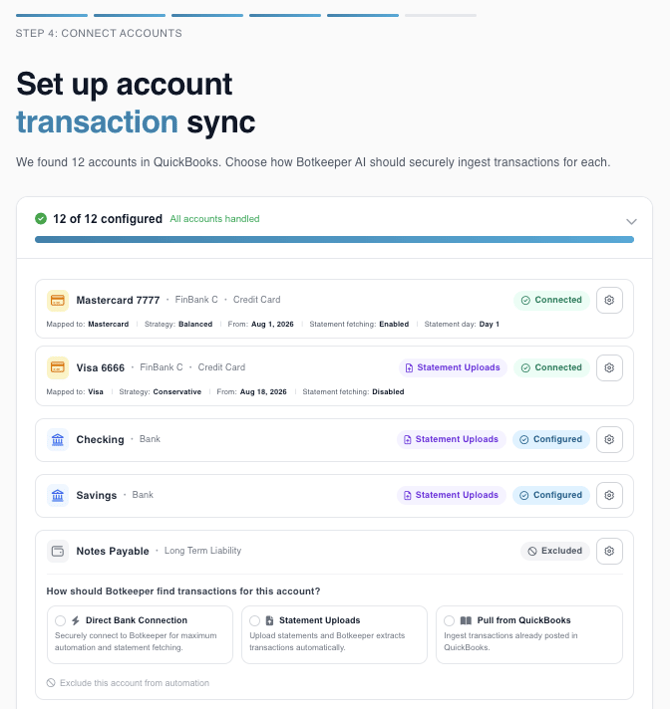
Step 4: Set Up Account Transaction Sync
Choose how Botkeeper ingests transactions for each financial account (Bank, Credit Card, Liability):
- Transaction Method Selection: For each listed account, select one of the following methods:
- Direct Bank Connection: Connect directly to the bank via Mastercard Integrator. Here are a list of institutions supported - check for a checkbox in the TA column. If SA is also checked that means it fetches statements as well!
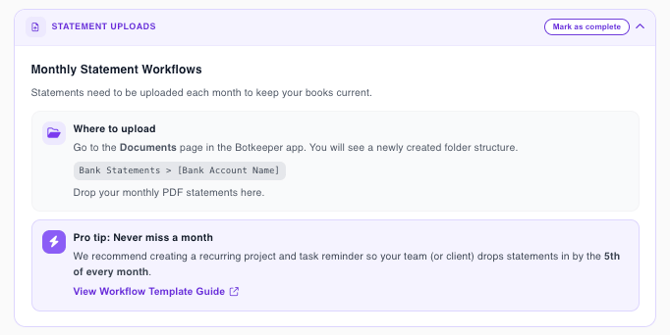
- Statement Uploads: Upload bank statements for automated extraction.
- Pull from QuickBooks: Ingest transactions already posted in the GL.
- Exclude: Exclude the account if no automation is needed.
- Configure Bank Connections (if applicable):
- Click Connect Bank and choose whether to enter credentials directly or send a SmartLink to the client.
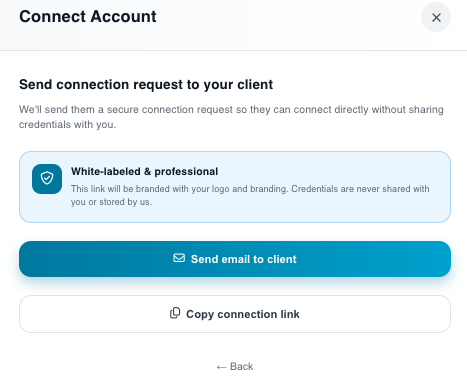
- Authenticate the bank and select the eligible accounts (e.g., Checking, Savings).
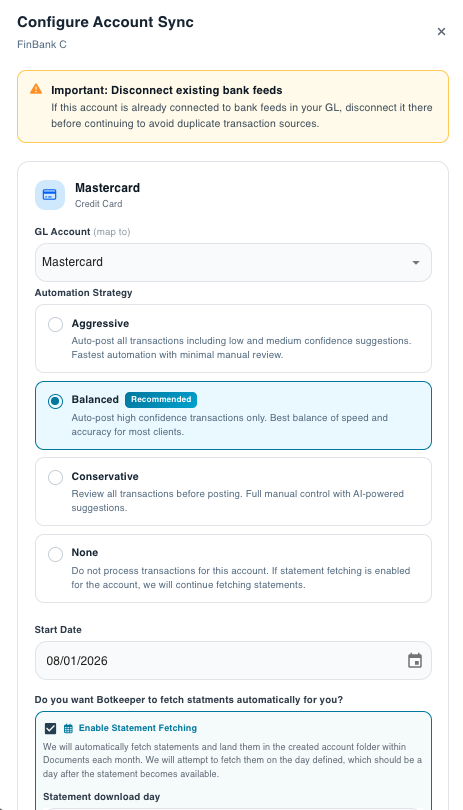
- Configure Sync Settings:
-
- GL Mapping: Map the bank feed to its corresponding GL account.
- Automation Strategy: Choose your confidence strategy:
- Aggressive: Auto-posts high, medium, and low confidence transactions.
- Balanced (Recommended): Auto-posts high confidence transactions; holds lower confidence items for review.
- Conservative: Holds all transactions for review before posting.
- None: Fetches statements/data without auto-processing transactions.
- Start Date & Statement Fetching: Set the start date and specify the statement download day of the month.
- Click Save and Continue.
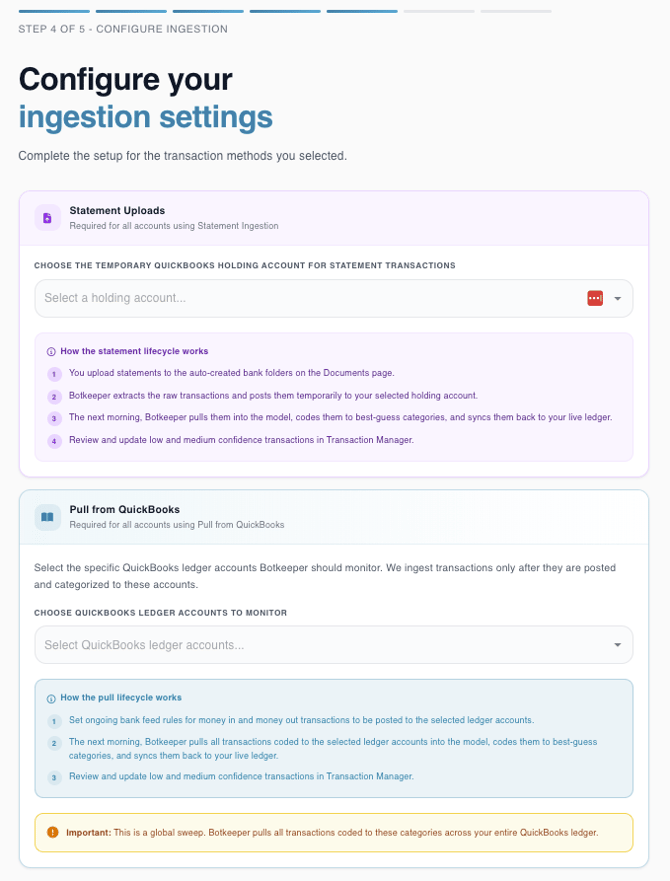
Step 5: Configure Ingestion Settings (Holding & Ledger Accounts)
Depending on your chosen transaction methods:
- Statement Uploads: Select a temporary Holding Account (e.g., Accounts Payable) where transactions temporarily post before AI categorization.
- Pull from QuickBooks: Select the specific ledger accounts (e.g., Accounts Payable, Accounts Receivable) that Botkeeper should monitor.
- Click Continue.
Step 6: Review Your Automation Blueprint & Finalize
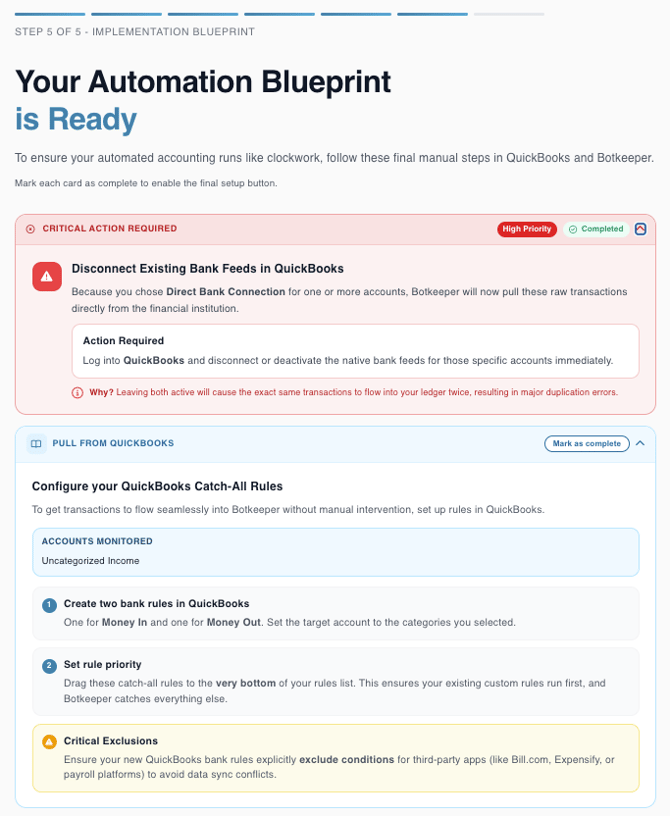
- Review the required final actions on your Automation Blueprint checklist (e.g., disconnecting existing bank feeds in QuickBooks or setting up catch-all rules).
- Mark items as complete and click Complete Setup.
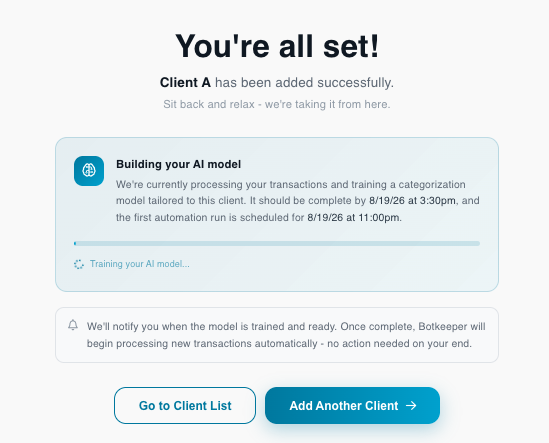
- Success Summary: The system will confirm client setup and display the timeline for building and optimizing the client’s custom AI model.
⚠️ If you leave the Add Client wizard before completing all steps, you can continue by going back to the client details in Client & User Management and clicking the "Continue Setup" button!
Finding a client
If you've already checked the fridge and under the couch, your best bet for finding a client that's already been added to the platform is to use the Navigate by Client field found at the top of the left navigation.
Terminating a client
To terminate a client take the following steps:
- Click on Client & User Management.
- Click on the Clients tab; if you are not already there.
- Click on the client name you would like to terminate.
- Click on the Terminate Client button in the upper right corner.
- A Terminate popup window will appear:
- Use the drop down to answer the following questions:
- Do you want to terminate now or after the months’ books are closed?
- Termination reason
- Enter your Signature for acknowledgement.
- Use the drop down to answer the following questions:
- Click the Terminate button.
- A popup window will appear alerting you:
We're sorry to see this one go!
With the termination of this client, you are now able to add another one to the platform. If you do not have one and would like to adjust your bill, chat with us in the lower right or submit a request to our team via ticket.
You have now successfully terminated your client from your platform.
Note: You will have 90 days from the date of termination to:
- Download items from your client portal before they are purged from the portal; unless you choose to delete your client’s data immediately.
- Cancel the termination should you decide to resume service — if 90 days have passed, you will be required to rescope the client.
To cancel a client termination
There may be various reasons you want to reverse a client termination; such as, but not limited to:
- You made a mistake and didn’t mean to terminate it
- Your client may have decided not to churn from your firm
- You need further assistance supporting the bookkeeping of your client and you learned Botkeeper can provide the service
Regardless of the reason it is advisable to reach out and discuss the change with your accounting manager to ensure it doesn’t negatively impact your contract.
Note: you can only cancel a client termination within 90 days after the termination date. To calculate the final date a client can have their termination canceled, take the termination date and add 89 days. For example, if the termination date is January 1, 2024, then the last date you can process a client termination cancellation would be March 30, 2024.
To cancel a client termination take the following steps from Global View (no client selected):
- Click on Client & User Management.
- Click on the Clients tab; if you are not defaulted there
- Click the client on the list—they will have "Terminated" showing in the Status column. Note if 90 days have passed since termination, you will be unable to reactivate a terminated client.
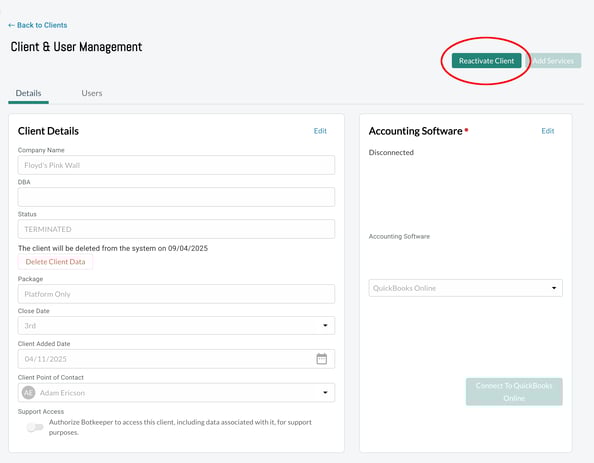
- You should be taken to the Details tab, where you will click a green button in the upper right corner labeled "Reactivate Client."
You have now successfully canceled the termination of your client from your Partner portal.
To cancel a client termination from Client View (you have already selected a client on the left navigation)
- Go to Client & User Management.
- Click on the Details tab.
- Click the Reactivate button.
Note this button will not appear if the client was terminated more than 90 days ago.
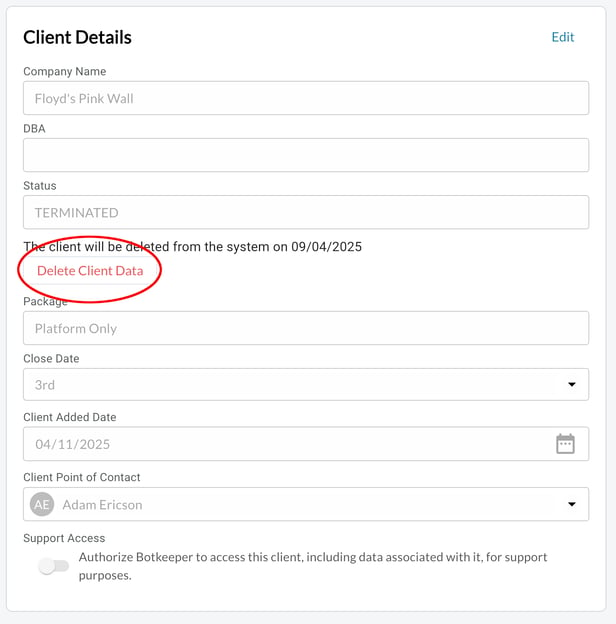
To immediately delete client data (Infinite only)
If you take no action, terminated clients' data is removed after 90 days. Or, you can choose to delete it immediately using the Delete Client Data button shown once you confirm termination and select a reason:
To reactivate a client
If the client has been terminated within the past 90 days, they can be reactivated. After 90 days, they will be purged from the system and must be added as a new client. To reverse a termination:
- Select the client using the left navigation, or visit the Clients tab in Client & User Navigation (note you will not see this tab if you already have a client selected).
- Click the Reactivate Client button in the upper left corner:
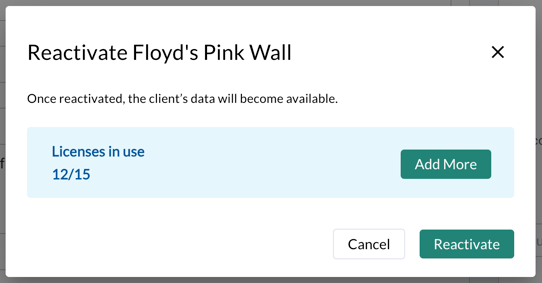
- You'll see a pop-up screen similar to what's shown below. It will remind you of your firm's number of available licenses. If you have no more licenses available, you can add more from here if you have permission. If you have an available license, simply click Reactivate, and your client will again be available on the platform.
FAQs
How do I connect a client's GL if they've already been added?
- Navigate to Client & User Management.
- Click the Clients tab.
- Click the Client you want to connect.
- Click the Edit button in the Accounting Software tile.
- Click the Connect to* button.
- A popup window will appear for you to:
- Follow the onscreen prompts to select the client you want to connect; and
- Authenticate your client
- Once connected, you will be brought back to your portal and the Accounting Software tile will be updated to reflect what client you connected.
If I add a new user to my SSO, will they be added to Botkeeper automatically?
Yes! The new user will be automatically added to the platform the first time they attempt to authenticate and log in.
- All new users added via the SSO integration to Botkeeper will be assigned a user role of Partner Ops, and no clients assigned by default.
- A firm administrator can change the user’s access and assign them to clients once the user is in the platform.
We've white-labeled our portal. Can our clients see anything about Botkeeper if we've invited them in?
If your client clicks on the Terms of Service and Privacy Policy links, they will see Botkeeper mentioned. While we make every effort to conceal the Botkeeper name from your clients, the law requires us to identify ourselves in our Terms of Service and Privacy Policy.