



 Enrico Palmerino
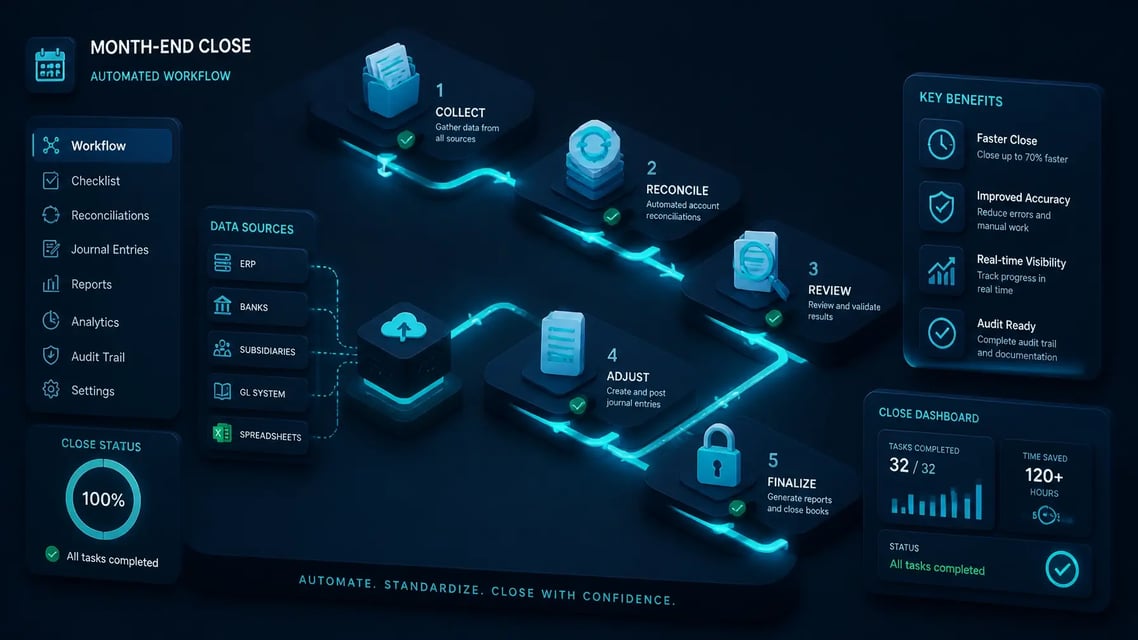
Let’s be honest for a second: how many times have you and your team spent the first week and a half of a new month buried under mountains of receipts, frantic bank reconciliations, and endless spreadsheet cross-checking?
If you are running an accounting firm or managing Client Accounting Services (CAS), the month-end close is likely one of your biggest operational bottlenecks. Long story short, it drains your team's energy, delays critical client insights, and caps the number of clients your firm can take on. But what if we told you that cutting your close from 10 long days down to a lightning-fast 2 days isn't just a pipe dream: it’s entirely achievable with the right automation framework?
Let’s take a look at how modern accounting firms are transforming their month-end close from a stressful scramble into a streamlined, predictable engine.
Why the Traditional Month-End Close is Crushing Your Firm's Capacity
Before we dive into the solution, let’s address the elephant in the room. Why does the traditional close take so long?
Statistics show that over 60% of accounting professionals spend more than 10 business days completing a standard month-end close. When your team is tied up manually keying data, chasing missing client documents, and hunting down petty variance discrepancies, everyone is operating in reactive mode.

As a result, your team suffers from burnout, your clients get their financial statements too late to make strategic decisions, and your firm’s growth stalls. But wait, there’s more! Manual closes also introduce human error: typos, missed accruals, and broken formulas that take hours to audit.
The short answer is, maybe it’s time to stop accepting the 10-day close as "just the way things are." Let's walk through the proven 7-step framework to automate your close and reclaim your firm's time.
Step 1: Standardize and Map Your Close Process
You can’t automate chaos. If every client has a completely different close process, custom spreadsheet templates, and erratic communication styles, technology won't save you: it will just accelerate the confusion.
- Audit your current baseline: Inventory every task involved in closing a client's books. Estimate the hours spent on each task and identify the biggest time sinks.
- Build a unified checklist: Create a standardized close checklist with clear owners, reviewers, and strict definitions of "done." (You can easily do this by creating a recurring "Project" within the "Work" section of Infinite.
- Consolidate your Chart of Accounts (COA): Standardize your COA across similar client industries so you can apply uniform rules and templates.
By establishing a standardized foundation, you set the stage for seamless technological leverage.
Step 2: Connect and Centralize Your Data Ecosystem
Manual data entry is the silent killer of profitability. If your team is constantly downloading CSV files from banks, logging into separate portals, and copy-pasting figures into spreadsheets, you are leaking billable hours.

To slash your close time, you need a unified ecosystem where all your financial data flows automatically. Integrating your general ledger (like QuickBooks Online or Xero) with an advanced automation suite like Botkeeper ensures that bank feeds, credit card transactions, and AP/AR subledgers sync in real-time.
When your data is centralized from day one, your month-end routine shifts instantly from discovery to confirmation.
Step 3: Automate Transaction Capture and Categorization
By the time the calendar hits the last day of the month, 80% of your routine transactions should already be correctly posted.
How? By leveraging machine learning and AI-driven categorization rules. Modern AI accounting solutions can automatically analyze vendor names, memo patterns, and historical accounting behavior to classify routine expenses with up to 98% accuracy.
Instead of your team manually coding hundreds of recurring transactions, the system handles the heavy lifting, flagging only true exceptions for human review. This means zero frantic data entry on day one of the close.
Step 4: Streamline Reconciliations with Smart Matching Rules
Let's be real: reconciling bank statements, credit card accounts, intercompany transfers, and clearing accounts is tedious, repetitive work.
With automated month-end workflows, you can set up intelligent matching rules that automatically clear transactions across subledgers and bank feeds. The software matches items continuously throughout the month, routing only unresolved variances to your senior accountants.
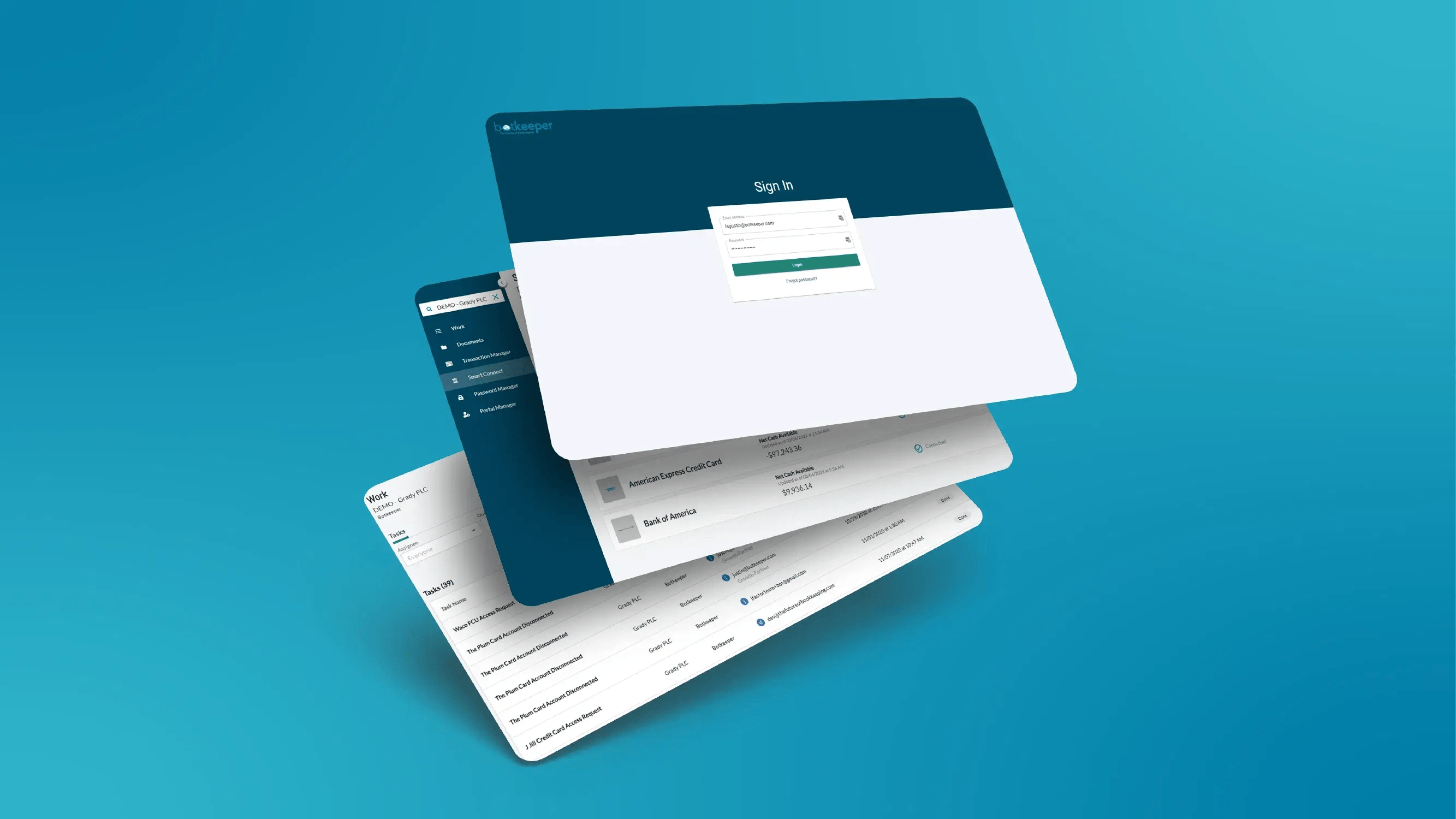
By shifting reconciliations from a once-a-month monster to a daily or weekly automated routine, your period-end review becomes nothing more than a quick final sanity check.
Step 5: Pull Work Forward with Pre-Close Automation
Why wait until the month is over to start closing it?
One of the most effective secrets of elite CAS firms is pre-close automation. You can stage a significant portion of your month-end work before the period even ends:
- Pre-schedule recurring journal entries: Set up automated generation for depreciation, amortization, prepaid expenses, and standard monthly accruals.
- Automate client reminders: Use automated alerts to remind clients of missing receipts, outstanding invoices, and expense documentation deadlines well before cut-off.
- Verify system syncs: Run preliminary connection health checks in the final days of the month to ensure all data pipelines are firing smoothly.
Shrinking the critical path of post-month-end tasks cuts days off your overall schedule immediately.
Step 6: Implement Controlled Workflows and Approvals
As you scale your client base, maintaining quality control across multiple staff members becomes critical. You need absolute discipline over period locking and journal entry approvals.
Set up workflow automation where every adjusting journal entry requires attached supporting documentation, a designated preparer, and a clear sign-off trail. Once the review is complete, enforce automated period locks so no backdated entries can sneak in and disrupt finalized reports.
This governance not only speeds up sign-off but also ensures SOC2-compliant, bank-grade security and audit-readiness for every client.
Step 7: Automate Reporting and Variance Analysis
The final hurdle in the traditional close is report generation and variance commentary. Partners and business clients don't just want numbers: they want context.
Instead of manually building management packs and calculating month-over-month flux analyses from scratch, use reusable reporting templates powered by your automated ledger. Advanced tools can automatically generate first-draft variance commentary, highlighting material budget deviations and cash flow shifts.
With one click, your team can review, refine, and publish polished financial packs that position your firm as an indispensable strategic advisor.
Ready to Transform Your Firm's Month-End Close?
Cutting your month-end close from 10 days down to 2 isn't about working harder: it's about working smarter with purpose-built AI and automation. By standardizing your workflow, connecting your data ecosystem, and letting intelligent machine learning handle the manual data entry, your firm can eliminate capacity roadblocks and scale faster than ever before.
Want to see how easy it is to automate your bookkeeping suite and delight your clients? Simply book a demo using the button below? In addition explore our pricing plans or check out our blog to discover more ways top-performing accounting firms are driving growth in 2026. Let's make this your firm's most efficient month yet!